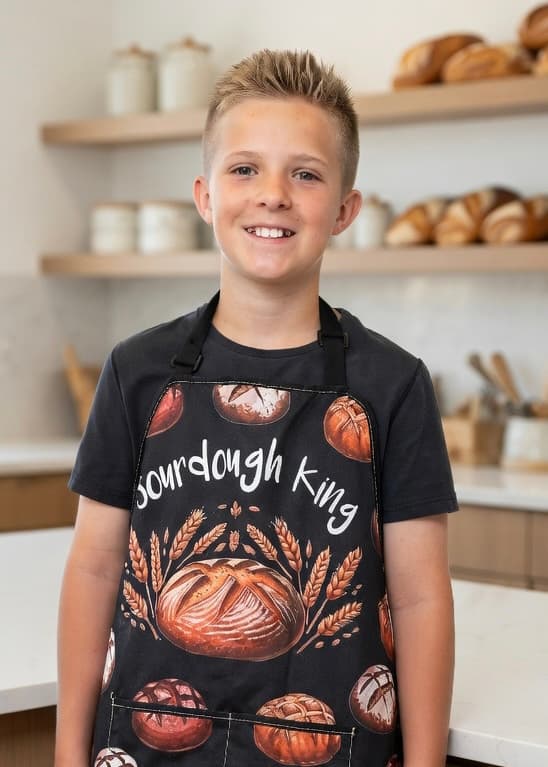
age 12
He wanted
a Onewheel.
So he learned
to bake sourdough.
Easton is 12 years old, lives in Las Vegas, and runs his own sourdough bread business, entirely because he had a goal and figured out a way to make money doing something he actually loves.
His mom took a sourdough class. Easton watched, got inspired, and asked if he could start selling it. The rest is bread history.
How it
started.
It started with his mom. She took a sourdough class, got the hang of it, and Easton watched the whole thing unfold in their kitchen. He saw the process, tasted the bread, and immediately had a thought: I could sell this.
The motivation? A Onewheel. Easton wanted one badly, and he needed a way to earn the money. Sourdough seemed like the answer. He asked his mom if he could start selling it (she said yes) and Rise and Grind was born out of a kid with a goal and a very specific purchase in mind.
What nobody told him about sourdough is how unpredictable it is. Every single loaf comes out different. Some come out so big they press against the top of the Dutch oven. Others have come out completely black. One time, a batch came out as flat as a quesadilla. That's just sourdough, it keeps you humble.
The hardest part, Easton will tell you, isn't the baking itself. It's the consistency. “I love baking sourdough, but if I don't bake it enough, then less people will buy.” Running a real business means showing up even when you don't feel like it, and at 12, Easton is already figuring that out.
How the
bread gets
made.
The fun and the frustrating thing about sourdough (and Easton will be the first to tell you this) is that no two loaves are ever exactly the same. The same recipe, the same hands, the same oven, and still: every loaf has its own personality.
Some come out enormous, so big they press up against the top of the Dutch oven. Others come out flat. One time a loaf came out completely black. Another time, flat as a quesadilla. That's sourdough. You can do everything right and still get surprised. And you can do something slightly different and accidentally make your best loaf ever.
The consistency challenge is real. Easton knows that showing up every single week (feeding the starter, planning the bake, getting the loaves out on time) is what separates a hobby from a business. He loves baking. But he's also learning that loving something and doing it reliably are two different skills, and he's working on both.
Every order that goes out has been shaped, scored, and baked by Easton himself. If a loaf doesn't look right, it doesn't get sold. That's the standard he holds himself to, every single week.
Every loaf
has a story.
From a terrible first attempt to a real business. Here's how it happened.
The Rise and
Grind standard.
A Real Goal, Not a Hobby
This started because Easton wanted a Onewheel and needed to earn the money. That kind of motivation is real. It keeps you baking even when a loaf comes out flat as a quesadilla.
Every Loaf Is Different
Some come out so big they press the top of the Dutch oven. Some come out wrong. That's sourdough, it's alive, it's unpredictable, and that's what makes it interesting. You learn something from every single bake.
You Keep Going
Yeaston got cooked alive. Some batches failed. The hardest thing is still baking consistently week after week. But Easton shows up, because that's what the business requires, and he cares about it.
Order fresh bread
from Easton's kitchen.
Pickup in Las Vegas. New batch every week. Order before Wednesday.
Order This Week's Bake →